Sokkia TM-1 Theodolite
Some time ago, I did a post on Transits, one of my hobbies. However, I have not done one on the last theodolite I acquired. That would be the Lietz (Sokkisha/Sokkia) TM-1A Theodolite. Note that I use the term transit and theodolite interchangeably throughout this post.
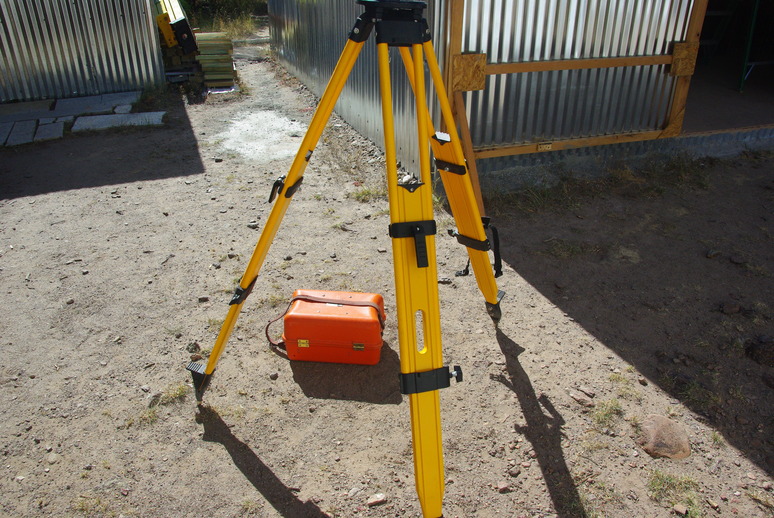
During its day, it was the flagship transit of the entire line of theodolites they built. It is a beautiful instrument, precision built and excellently designed. It has direct reading micrometers with both vertical and horizontal precision of 1 second, but can be extrapolated to 0.1 second.
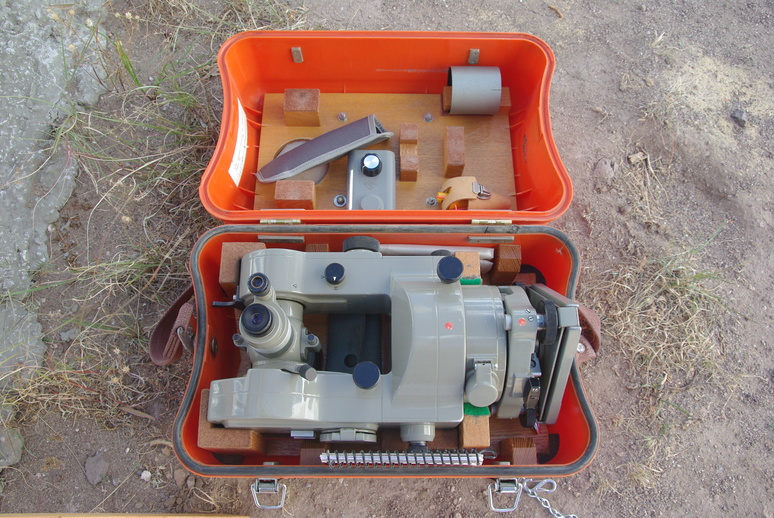
I added a few items to the kit which did not come upon purchase, such as a plumb bob, pen and transit notebook, and of course spectacles (one of the perks of getting old!). The transit is very easy to set up and readings are very repeatable. Of course, a lot of this is the care taken in setup and leveling of the tripod and level vials on the instrument itself.
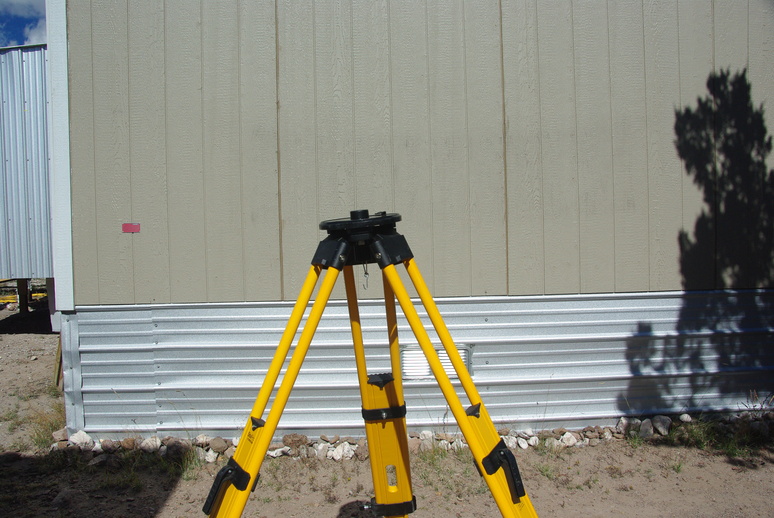
After the tripod is placed over the benchmark or station within an inch or so, it is approximately leveled before the instrument is mounted.
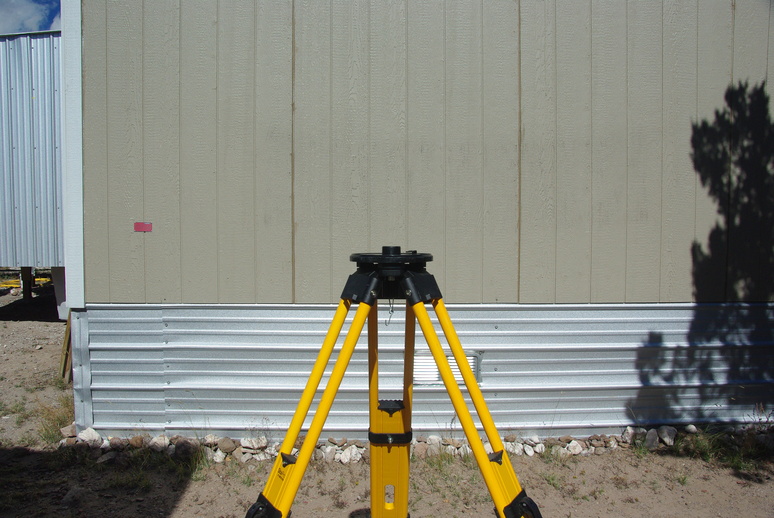
The TM-1A is then mounted on the tripod center. At this point the station marker should be seen through the optical plummet, a really nice feature not affected by wind like a plumb bob. Several other transits I have also use an optical plummet. Never leave home without it!
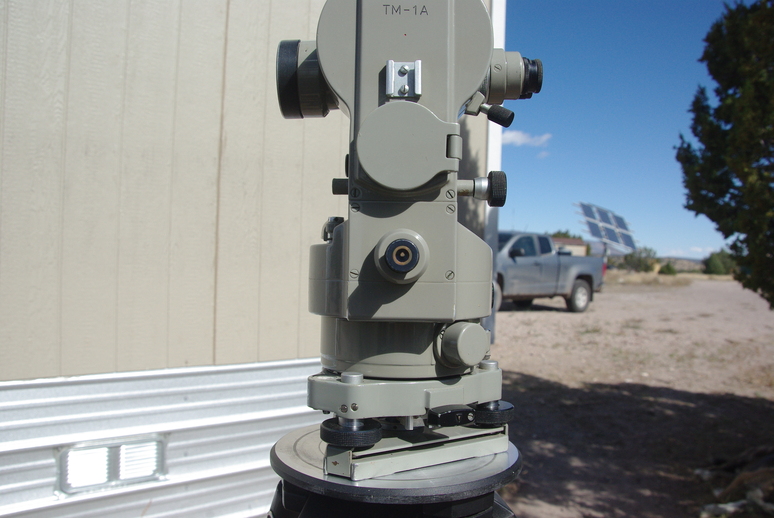
The station marker is placed in the center of the plummet by adjustment of the three wheels on the base. Next, the round level on the theodolite is centered by adjusting the length of the tripod legs. Finally, the station marker is recenterd by sliding the entire transit on the tripod, taking care not to rotate the instrument. Then the tripod center screw is retightened. Lastly, the transit is leveled by adjusting the leveling wheels of the theodolite, first with the level parallel to two of the wheels, then rotated 90 degrees and leveled using only the third wheel.
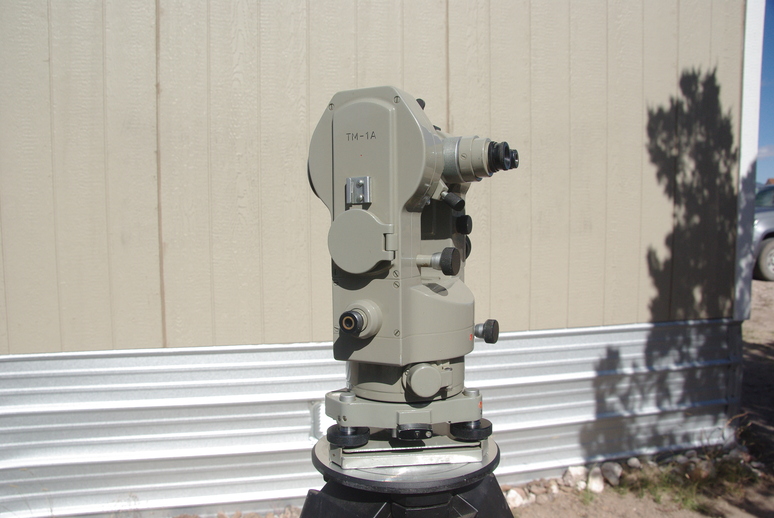
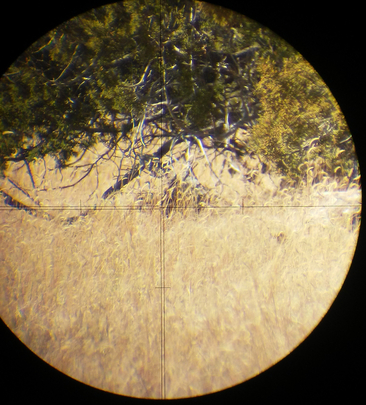
The 30X optics are standard for this type of transit, with crosshairs and stadia marks both vertically and horizontally. The horizontal marks could also be used with a subtense bar in addition to a normal level rod for distance measurements. However, subtense bars are rare as hen’s teeth, as the old saying goes, and are very expensive, even on E-Bay
Of course, none of this is useful without some method of determining direction, and horizontal (or vertical) angles. The TM-1A comes with separate optics for horizontal and vertical angle readings. This helps eliminate possible confusion or blunders from reading the wrong scale!
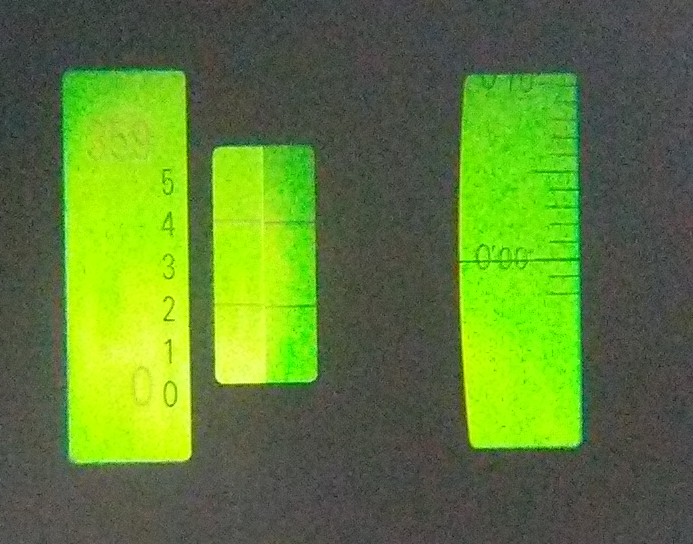
It is not really necessary, but I like to start measurements with the horizontal scale set to zero degrees, minutes and seconds, as it makes calculations easier. Sometimes you may wish to start at a set angle, or start at any arbitrary angle. A nice feature here makes this possible, a covered wheel at the base that’s easy to set. Some theodolites I have require releasing both motion adjustments, then rotating a horizontal wheel in the gap between the upper and lower plates. Since the TM-1A is a Direction Theodolite rather than a Repeating Theodolite, it has only one motion to release, so the covered adjustment makes perfect sense.
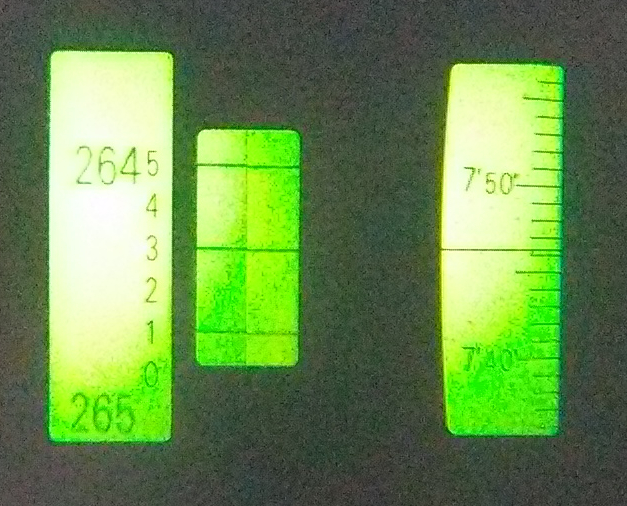
After turning an angle, the adjustment wheel on the right standard aligns the marks seen in the window for a reading as shown above. It is very difficult to get photos of the micrometer readings as most cameras are not designed to peer into a tiny hole! However, a cellphone camera is esentially a pinhole camera and works okay, but takes many attempts to get it aligned with the optics on the transit, and to get it to focus. Low light levels help to prevent blooming, so I almost completely close the mirror which determines the illumination on the micrometer scales.
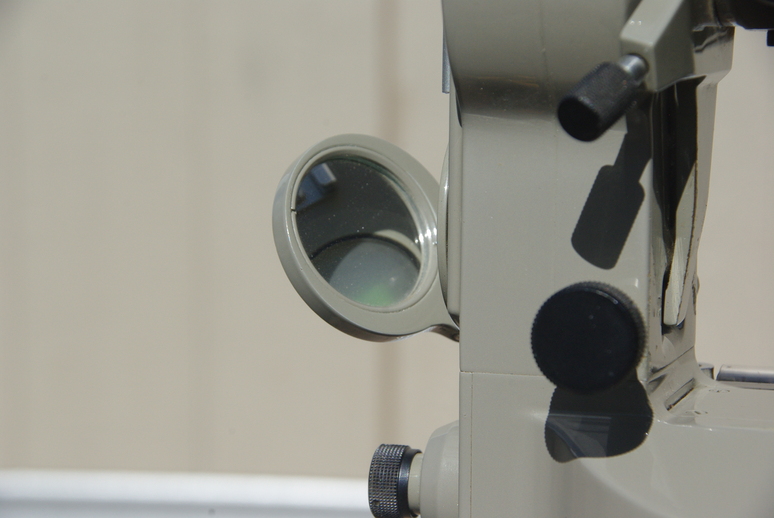
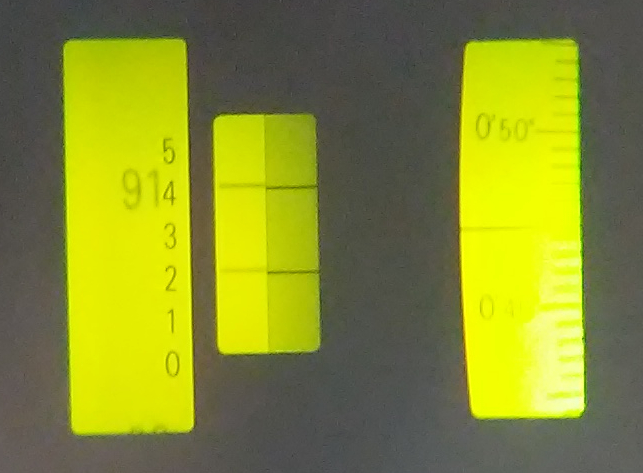
The vertical reading is determined the same as the horizontal, but requires the selection knob on the right standard be rotated from “H” to “V.”
The latest use for this particular instrument was laying out the angles for the front porch. That was fun and rewarding. I really enjoyed using this fine old theodolite, which still works as well as many total stations, but just takes a bit more care in its use.
Have a great day, and may the Lord Jesus guide your life as He does mine! Take care and stay safe!