Progress in SARS-CoV-2 Vaccine
It seems some progress is being made in the arena of a vaccine for COVID-19. There are lots of pharmaceutical companies developing candidates. Most are in phase 1 or 2 of clinical trials. Currently there is no vaccine proven to protect against SARS-CoV-2 infection.
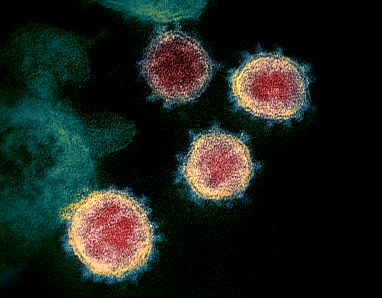
Like other coronaviruses, SARS-CoV-2 particles are spherical and have proteins called spikes protruding from their surface. These spikes latch onto human cells, then undergo a structural change that allows the viral membrane to fuse with the cell membrane. The viral genes can then enter the host cell to be copied, producing more viruses. Recent work shows that, like the virus that caused the 2002 SARS outbreak, SARS-CoV-2 spikes bind to receptors on the human cell surface called angiotensin-converting enzyme 2 (ACE2). However, unlike earlier caronaviruses, the COVID-19 virus exhibits faster human-to-human transmission, and is both more lethal and more contagious.
Kaiser Permanente Washington Health Research Institute is conducting trials on a vaccine called mRNA-1273, developed by Moderna and based on Messenger RNA (mRNA). It does not contain any part of the actual coronavirus and cannot cause infection.
Messenger RNA is a single-stranded molecule that carries genetic code from DNA in a cell’s nucleus to ribosomes, the cell’s protein-making machinery. mRNA medicines are sets of instructions that direct cells in the body to make proteins to prevent or fight disease. According to Moderna:
mRNA-1273 is an mRNA vaccine against SARS-CoV-2 encoding for a prefusion stabilized form of the Spike (S) protein.
The Reglatory Affairs Professional Society (RAPS) has a nice website listing current candidates who are developing or trying to develop a vaccine.
Ribonucleic acid (RNA) is a polymeric molecule essential in various biological roles in coding, decoding, regulation and expression of genes. RNA and DNA are nucleic acids, and, along with lipids, proteins and carbohydrates, constitute the four major macromolecules essential for all known forms of life. Like DNA, RNA is assembled as a chain of nucleotides, but unlike DNA, RNA is found in nature as a single strand folded onto itself, rather than a paired double strand. Cellular organisms use messenger RNA (mRNA) to convey genetic information (using the nitrogenous bases of guanine, uracil, adenine, and cytosine, denoted by the letters G, U, A, and C) that directs synthesis of specific proteins. Many viruses encode their genetic information using an RNA genome.
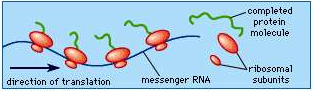
Messenger RNA (mRNA) carries information about a protein sequence to the ribosomes, the protein synthesis factories in the cell. It is coded so that every three nucleotides (a codon) corresponds to one amino acid. In eukaryotic cells, once precursor mRNA (pre-mRNA) has been transcribed from DNA, it is processed to mature mRNA. This removes its introns—non-coding sections of the pre-mRNA. The mRNA is then exported from the nucleus to the cytoplasm, where it is bound to ribosomes and translated into its corresponding protein form with the help of transfer RNA (tRNA). In prokaryotic cells, which do not have nucleus and cytoplasm compartments, mRNA can bind to ribosomes while it is being transcribed from DNA. After a certain amount of time, the message degrades into its component nucleotides with the assistance of ribonucleases.
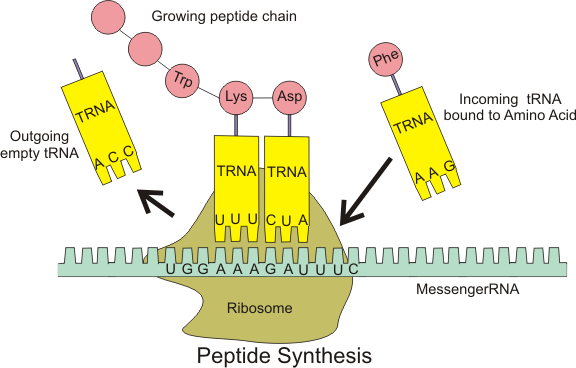
A transfer RNA (tRNA) (formerly referred to as sRNA, for soluble RNA) is an adaptor molecule composed of RNA, typically 76 to 90 nucleotides in length, that serves as the physical link between the mRNA and the amino acid sequence of proteins. tRNA does this by carrying an amino acid to the protein synthetic machinery of a cell (ribosome) as directed by a 3-nucleotide sequence (codon) in a messenger RNA (mRNA). As such, tRNAs are a necessary component of translation, the biological synthesis of new proteins in accordance with the genetic code.
Are your eyes glazed over yet? Mine are. May God Bless you and your family. Stay safe and take common sense precautions against infection. Until next time…
For more indepth information on the caronavirus structure, check out Science Magazine’s Website.
Top Banner Photo from Drug Target Review