New Chicken House
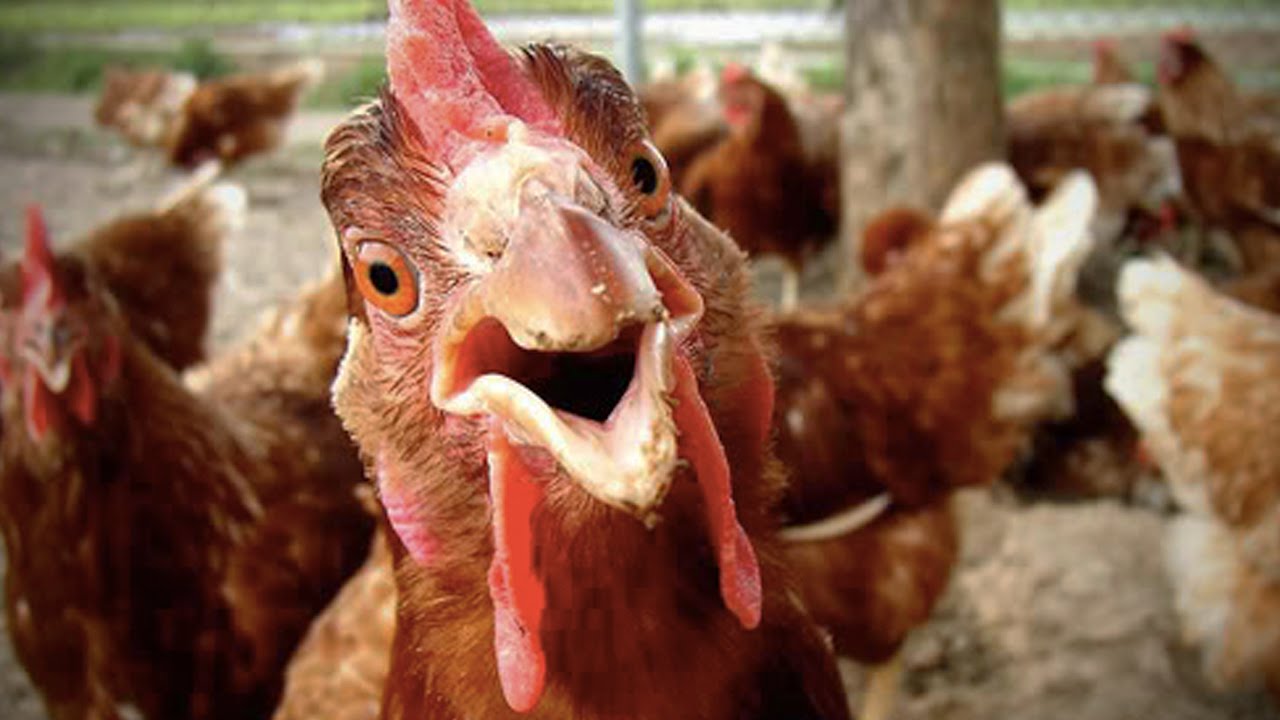
We’re taking a little detour for this post and showing what we are working on during the self-imposed “Quarantine Period” of this COVID-19 pandemic. One of our family members is in the process of acquiring chickens and needed a place to pen them up to prevent the coyotes or hawks from having free lunches.
We had an old chicken house, but it was in so sad a condition we decided to remove it and build another. So we took it down to the foundation and started over. We were able to salvage one wall as it was a metal wall, but the rest was wood and beyond saving, including the roof.
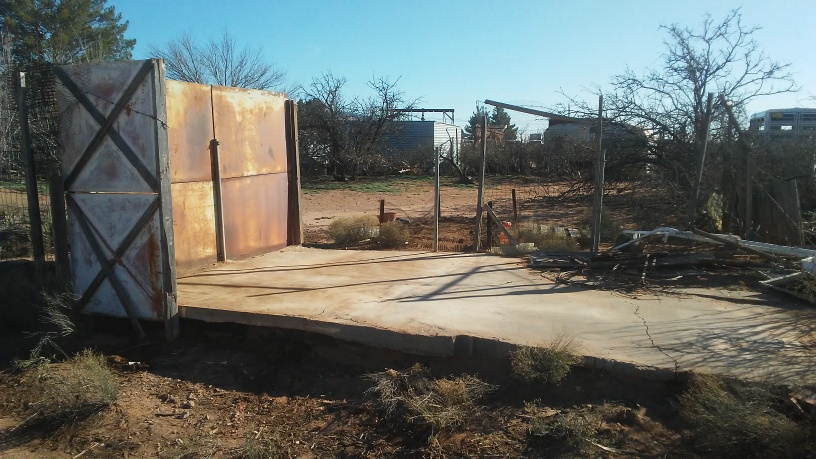
The floor slab was made from excess concrete from another project from the 70’s era and was placed hastily and far from level. But hey, it’s a chicken house, so it can be used. Sort of defines the phrase “custom manufacture.” So even though the salvaged wall and foundation are not square or level, it will suffice.
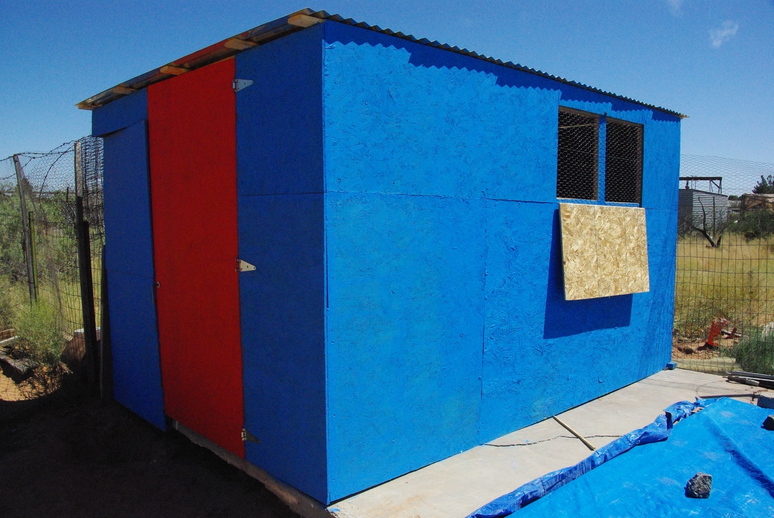
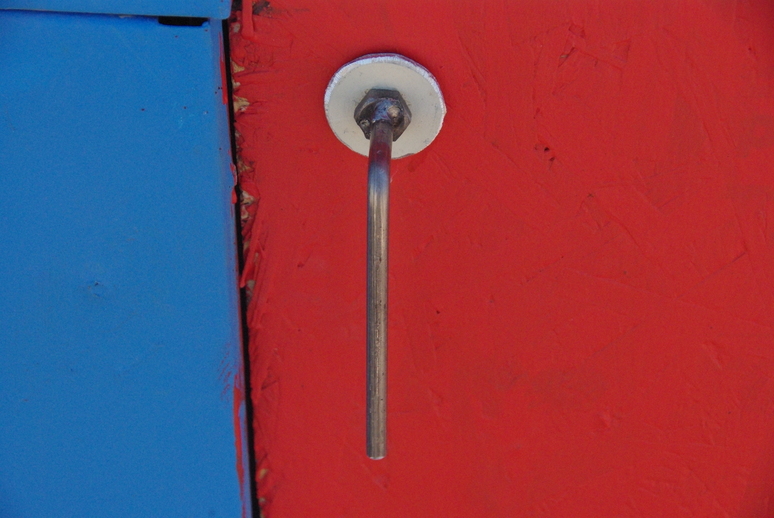
The end result is painted blue (color on hand) with the doors painted burnt red (20 year old paint). Given the odd shapes and sizes we had to work with, it turned out okay. We placed one window covered with chicken wire in one side for ventilation, and doors in both ends so we could rotate where the chickens will get their exercise searching for bugs.
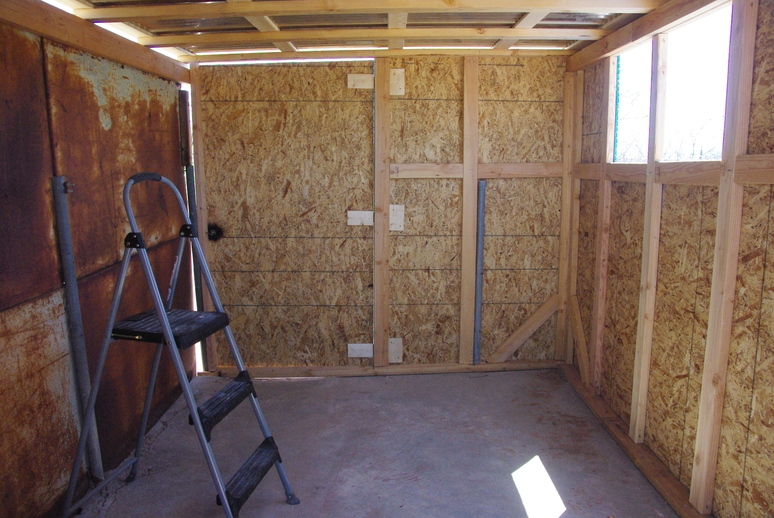
Of course, chickens need a safe, semi-dark place to lay eggs. Even chickens need a little privacy!
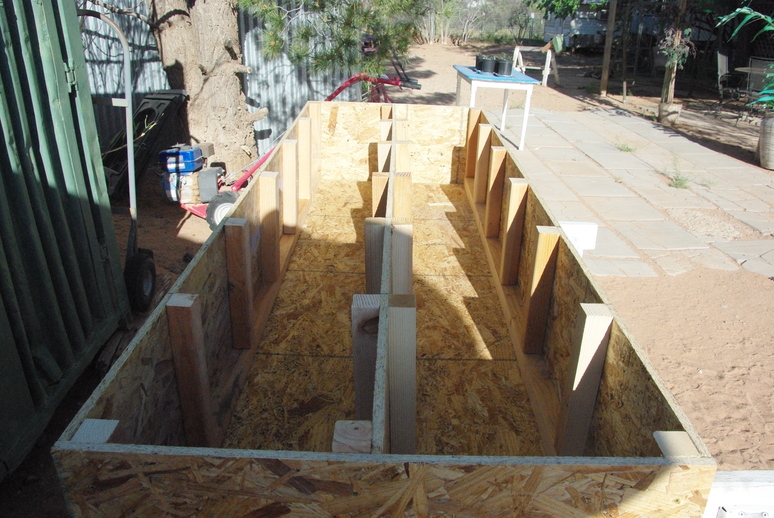
So we built some nests for them, a dozen. The whole nesting box plan was a seat-of-the-pans design, made up as we went along. The only pre-detemined figure was the size of the individual boxes. We decided a size of a 12-inch cube would be ideal. This is from The Happy Chicken Coop
A standard nest box for regular chickens such as Leghorns, Sussex, Plymouth Rocks and hybrid layers needs to be a 12 inch cube; 12 inches tall, wide and deep. This will fit the average hen quite nicely. Larger birds such as Jersey Giants will need 12 inches deep, 14 inches wide and 12 inches tall. Bantam hens can get away with a slightly smaller box of 10 inches deep, 12 inches wide and 10 inches high. These measurements make the box snug and there are reasons for that. If the hens have too much room they tend to kick out the bedding material. It also discourages hens from bunking up together to lay eggs.
After searching for scrap materials, we came up with enough to build a double row nest box with six nests on each layer (no pun intended).
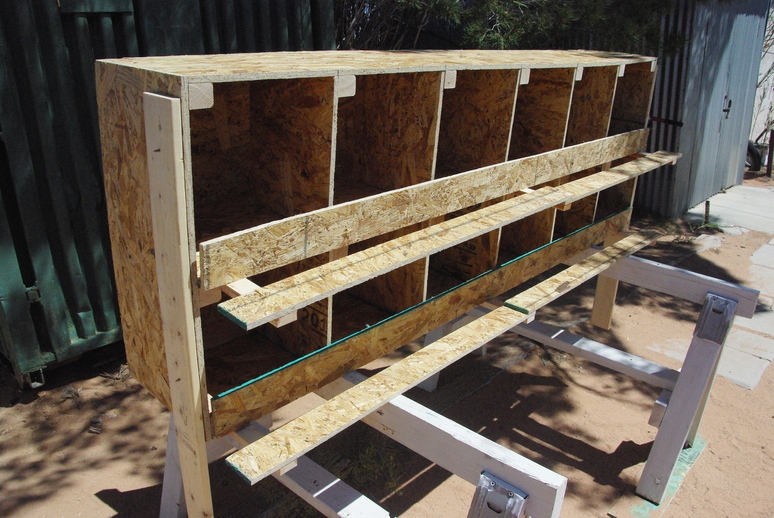
The inside of the chicken coop looks a but more usable now with the nesting boxes screwed to one wall. It should be able to accomodate approximately 40-50 hens. Even so, when I was a kid on the farm, I seem to remember that hens all had their favorite nest, and they all wanted to lay in that box. So the “ideal” numbers will vary.
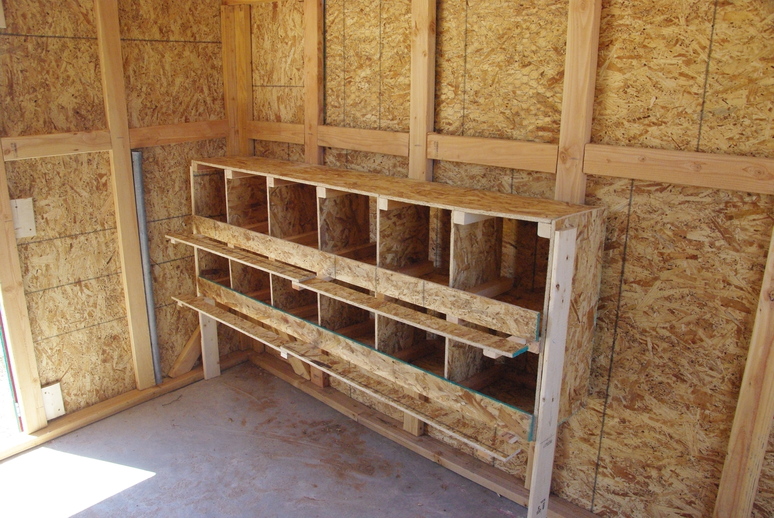
It is mounted 18 inches from the floor in a corner which with the doors closed is fairly dark. They should love their new accomodations. Now the next step is to get some chickens (and chicken feed). There remains some details to complete, such as a ramp up to the door, some more paint, and roosting bars.
There are some basic considerations for roosting bars. They need to be higher than the nesting boxes to discourage the hens from roosting on the nesting boxes. I want to make the roosting bars from 1x4s or 2x4s with the 4 inch side horizontal, and spaced about 15 inches at around 45 degrees like stairs to prevent the higher hens pooping on the heads of the ones below. As chickens sleep flat-footed, this width will help in keeping the feet warm in winter and prevent frostbite. Their body will protect the tops.
Chickens have a “pecking order” so the higher ones will be at the upper bars. So I may start about 18 inches from the floor to about 15 inches from the roof. This will allow them to descend gradually instead of having too far a drop, thus help in preventing bumblefoot (a staph infection of the foot and leg often caused by hard landings off a roost).