Levels
This dissertation is in response to a comment I received about Paradise as the first level of Hell. I disagree with that statement. Let’s dive right in…
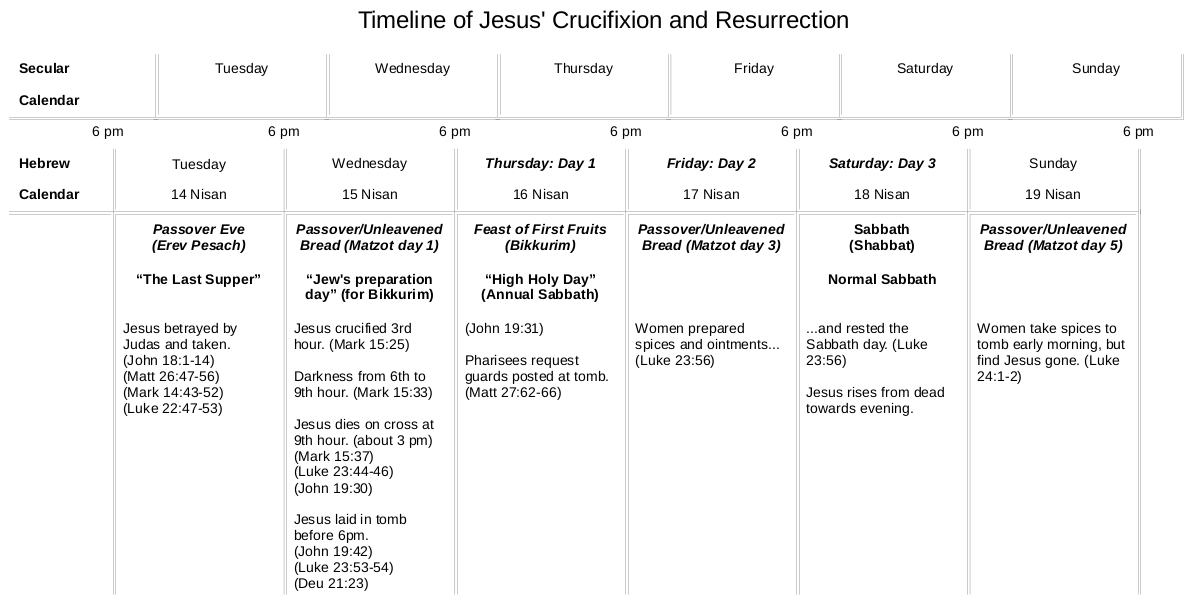
Before we get deeply into this, let’s set the stage. We start with the week this all took place, in Jerusalem, Passover week.
Jesus is crucified on the cross, and on each side are two criminals. One is unrepentant, the other asks Jesus to remember him.
Luke 23:43
And Jesus said unto him, Verily I say unto thee, To day shalt thou be with me
in paradise.
Firstly, the comma. There are no commas in the Greek. Secondly, as discussed in this article, Paradise is in Heaven. As such, does the thief arrive in Heaven before Jesus? How can this be, as Jesus states to Mary Magdalene in John 20:17,
 Jesus saith unto her, Touch me not; for I am not yet ascended to my Father:
 but go to my brethren, and say unto them, I ascend unto my Father, and your
 Father; and to my God, and your God.
Much better if the comma placed after the “today” rather than before, reading, “…I say unto thee today, shalt thou be with me…” Commas were added much later to the Bible text. Also, Jesus Himself several times says,
John 1:18 No man hath seen God at any time; the only begotten Son, which is in
the bosom of the Father, he hath declared him.
John 5:37 And the Father himself, which hath sent me, hath borne witness of me.
Ye have neither heard his voice at any time, nor seen his shape.
John 6:46 Not that any man hath seen the Father, save he which is of God, he
hath seen the Father.
And again, in Ephesians 4:8-10,
8 Wherefore he saith, When he ascended up on high, he led captivity captive, and
gave gifts unto men.
9 (Now that he ascended, what is it but that he also descended first into the lower
parts of the earth?
10 He that descended is the same also that ascended up far above all heavens, that
he might fill all things.)
There are three references to Paradise in the King James Bible, which this article will be based upon, with possible references to the Greek and Hebrew (Jay P. Green 1986), and perhaps to the Aramaic text. The three references are:
- Luke 23:43. See above.
- 2 Corinthians 12:4. How that he was caught up into paradise, and heard unspeakable words, which it is not lawful for a man to utter.
- Revelation 2:7. He that hath an ear, let him hear what the Spirit saith unto the churches; To him that overcometh will I give to eat of the tree of life, which is in the midst of the paradise of God.
The Greek word is paradeisos, meaning …an Eden(place of future happiness, “paradise”), in Hebrew, pardec, meaning a park, forest, orchard. It seems at odds that Paradise would be in two places at once, Heaven and Hell. Firstly, it doesn’t meet the common sense test; secondly, it seems blasphemous to call the Paradise of God, Hell. As in Matthew 12:24-28.
24 But when the Pharisees heard it, they said, This fellow doth not cast out devils,
but by Beelzebub the prince of the devils.
25 And Jesus knew their thoughts, and said unto them, Every kingdom divided against
itself is brought to desolation; and every city or house divided against itself
shall not stand:
26 And if Satan cast out Satan, he is divided against himself; how shall then his
kingdom stand?
27 And if I by Beelzebub cast out devils, by whom do your children cast them out?
therefore they shall be your judges.
28 But if I cast out devils by the Spirit of God, then the kingdom of God is come
unto you.
In verse 24, the Pharisees blasphemed against the Holy Spirit, so according to the Bible, they can have no forgiveness. As stated in Mark 3:29-30 and Luke 12:10.
Mark 3:29 But he that shall blaspheme against the Holy Ghost hath never
forgiveness, but is in danger of eternal damnation:
30 Because they said, He hath an unclean spirit.
Luke 12:10 And whosoever shall speak a word against the Son of man, it
shall be forgiven him: but unto him that blasphemeth against the Holy Ghost it
shall not be forgiven.
So it seems this article’s subject may have been influenced by the book, Dante’s Inferno1. The third part of Dante’s Inferno is Paradiso2, which is where comment in the opening paragraph of this article may have been based upon.
There are allusions to heavens throughout the Bible, too numerous to list here. Using the first reference in Genesis 2:1,
THUS the heavens and the earth were finished, and all the host of them.we see the Hebrew definition of heavens (8064) as,
shamayim shaw-mah'-yim dual of an unused singular shameh {shaw-meh'}; from an unused
root meaning to be lofty; the sky (as aloft; the dual perhaps alluding to the visible
arch in which the clouds move, as well as to the higher ether where the celestial
bodies revolve):--air, X astrologer, heaven(-s).
This is not the Heaven of God. As Astrophysicist Neil deGrasse Tyson once stated, “… then who made God?”, showing his miscomprehension that God is eternal, and thus outside the Universe and Time; whereas we, in our limited understanding, cannot conceive of anything that we can’t see and touch. Thus we who believe in Jesus and God, must believe by Faith in God and His Son, Jesus.
So when we die, the body returns to dust and the spirit returns to God. This is the first death. The soul is who we are. The spirit is created of God, and that’s what makes us eternal. The whole person consists of three parts, body, soul and spirit.
Genesis 2:7 And the Lord God formed man of the dust of the ground, and breathed
into his nostrils the breath of life; and man became a living soul.
Matt 10:28 And fear not them which kill the body, but are not able to kill the
soul: but rather fear him which is able to destroy both soul and body in hell.
2 Corinthians 5:8 We are confident, I say, and willing rather to be absent from
the body, and to be present with the Lord.
1 Peter 4:19 Wherefore let them that suffer according to the will of God commit
the keeping of their souls to him in well doing, as unto a faithful Creator.
Rev 6:9 And when he had opened the fifth seal, I saw under the altar the souls
of them that were slain for the word of God, and for the testimony which they held:
Rev 20:4 And I saw thrones, and they sat upon them, and judgment was given unto
them: and I saw the souls of them that were beheaded for the witness of Jesus,
and for the word of God, and which had not worshipped the beast, neither his image,
neither had received his mark upon their foreheads, or in their hands; and they
lived and reigned with Christ a thousand years.
If the soul ceased to exist, wouldn’t that negate Revelation 6:9?
Hebrews 9:27 And as it is appointed unto men once to die, but after this
the judgment:
This is the key,
Revelation 2:11 He that hath an ear, let him hear what the Spirit saith
unto the churches; He that overcometh shall not be hurt of the second death.
Revelation 21:8  But the fearful, and unbelieving, and the abominable, and
murderers, and whoremongers, and sorcerers, and idolaters, and all liars,
shall have their part in the lake which burneth with fire and brimstone:
which is the second death.
If we have accepted Jesus as our Lord and Savior, we will be with Him, as stated in 1 Thessalonians 4:13-18,
13 But I would not have you to be ignorant, brethren, concerning them which are
asleep, that ye sorrow not, even as others which have no hope.
14 For if we believe that Jesus died and rose again, even so them also which
sleep in Jesus will God bring with him.
15 For this we say unto you by the word of the Lord, that we which are alive
and remain unto the coming of the Lord shall not prevent them which are asleep.
16 For the Lord himself shall descend from heaven with a shout, with the voice
of the archangel, and with the trump of God: and the dead in Christ shall
rise first:
17 Then we which are alive and remain shall be caught up together with them in
the clouds, to meet the Lord in the air: and so shall we ever be with the Lord.
18 Wherefore comfort one another with these words.
References
Footnotes
Dante’s Inferno is the first part of Italian writer Dante Alighieri’s 14th-century narrative poem The Divine Comedy. It is followed by Purgatorio and Paradiso. The Inferno describes the journey of a fictionalised version of Dante himself through Hell, guided by the ancient Roman poet Virgil.↩︎
The Paradiso begins at the top of Mount Purgatory, called the Earthly Paradise (i.e. the Garden of Eden).↩︎