The Generator
We are taking a little break from the front porch project to see if we can set up a generator for backup power. By the way, the header image is the 4 O’clock plant, very beautiful, but not good for horses to consume. So, if we do get horses or mules in the future, we will have to make a major effort to clean all those plants out of the pastures.
Now, back to the subject. The below image shows the necessary cabling and underground conduit that will be installed.
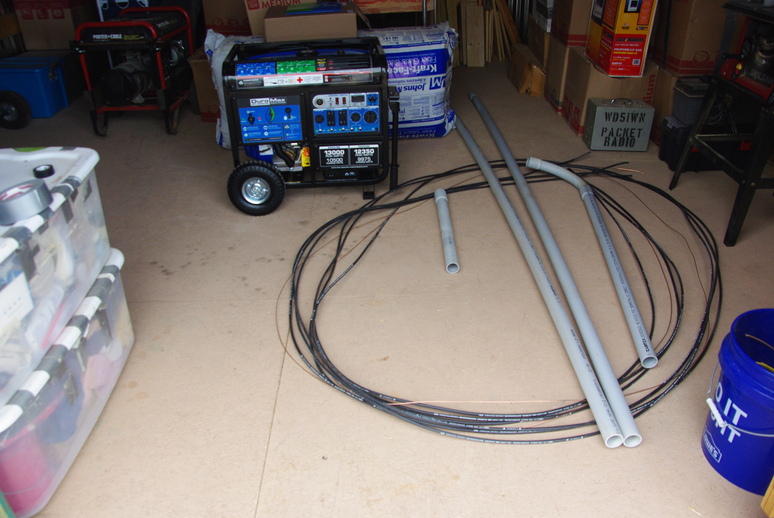
This is the generator we intend to use for backup power. It should be sufficient to supply all the critical circuits we may need if the commercial power is not available. Appliances such as refrigerators, furnace, lights, and hot water need to be operational. One of the things we don’t care for is the fact this particular home came with a water heater that’s electric. We may change that sometime in the future, perhaps to a on-demand gas-fired water heater.
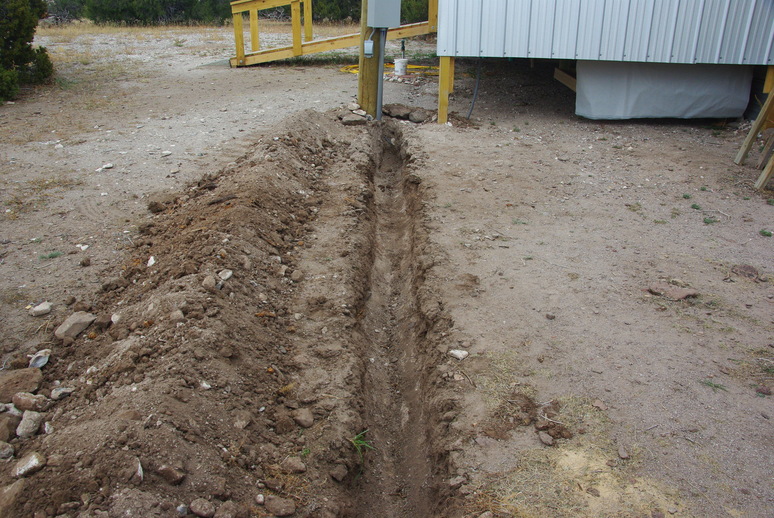
To connect the generator to the meter pole box, of course we had to dig a ditch. Good thing there are no rocks in the soil, except where we wish to dig! Drats! I should put a smiley face here.
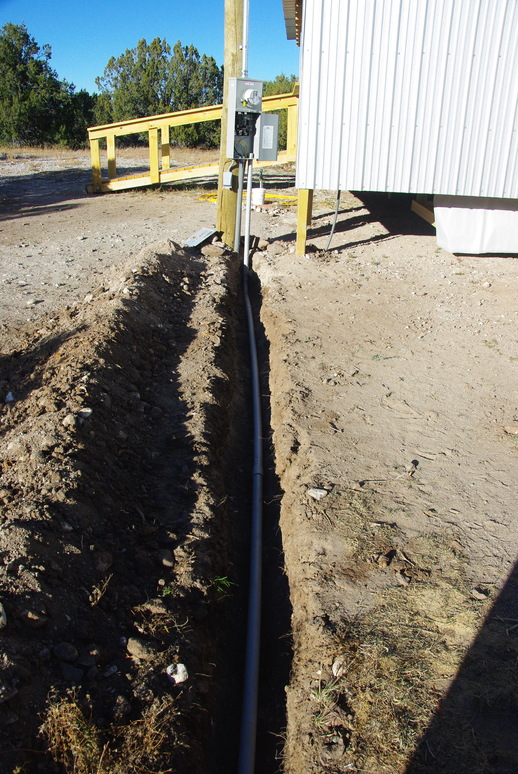
We are using 1 1/2” PVC pipe to run the wiring through, as it is large enough for the four wires required. Three #2 AWG cables and a ground wire are required for 240 VAC from the generator back to the house input. That should supply a maximum of 50 amps, more than enough for critical circuits.
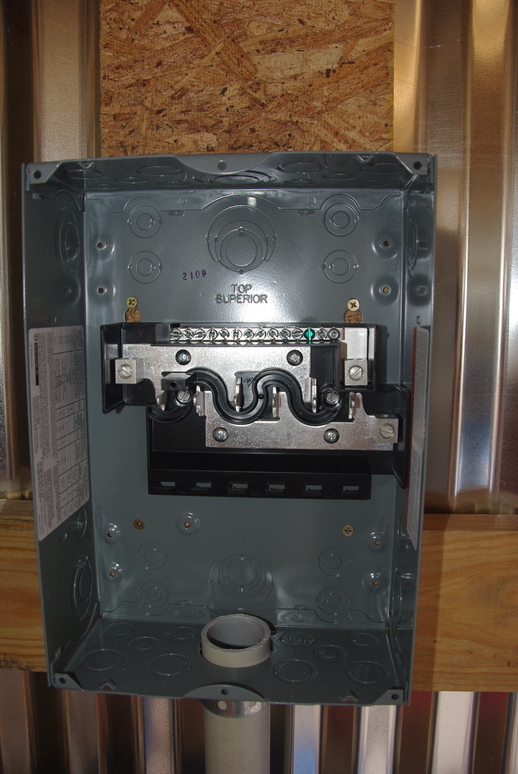
The switch box will house two 50 ampere circuit breakers, one for generator to house, and one for power for the shed itself. Still to be mounted is the ground strap and strip for additional ground wires. It comes separately, of course.
Switch over is fairly straight forward in case of commercial power loss. First, the main breaker on the meter pole is switched off, then the generator circuit breaker is switched on. There are automatic circuits available for that sort of thing, but we may not want the generator to come on for any little glitch in power. So, this way, we retain the ability to only supply backup power when we wish! And, we don’t necessarily want to feed power back into the grid! Because of the altitude here, we will most likely get less than the rated output from the generator, but still at least 35-40 amperes @ 240 VAC. Gasoline gives more available power than propane, but propane is still cheaper. The generator will use a bit less than one cubic foot of propane per hour at 1/2 load. But again, altitude will be a factor. Still better than being left in the dark!
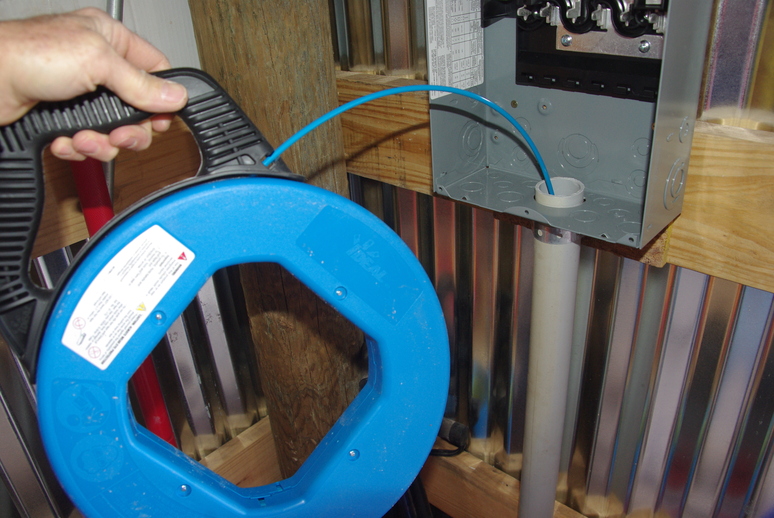
Feeding the wires into and pulling them through the pipe requires a little help. The cable fish should do the job nicely. With one person pulling and another feeding the wires into the conduit, the wiring is a breeze to install. We wrapped a bit of “merchant’s wire” around the cables, then covered with electrical tape to prevent disconnection. It may look ugly, but it works fine. For smaller wires, they could be placed directly through the puller eyelet. However, these cables are #2 AWG and quite stiff, so a bit more is required.
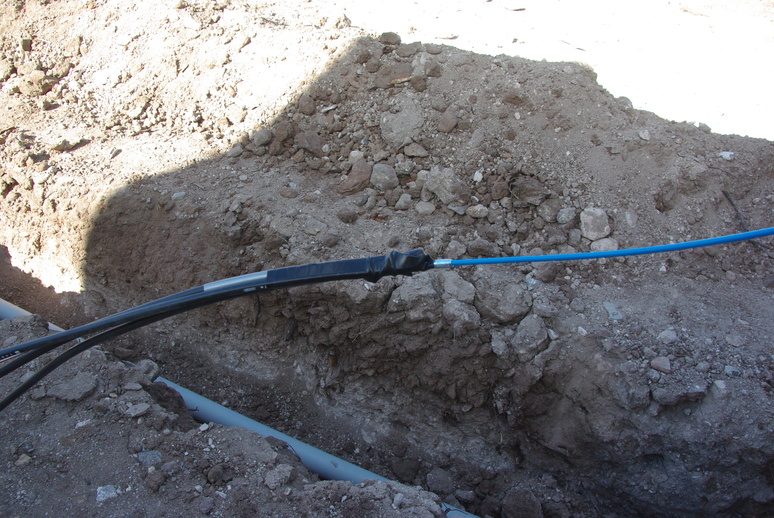
After pulling from inside the shed, the two images below show the end result.
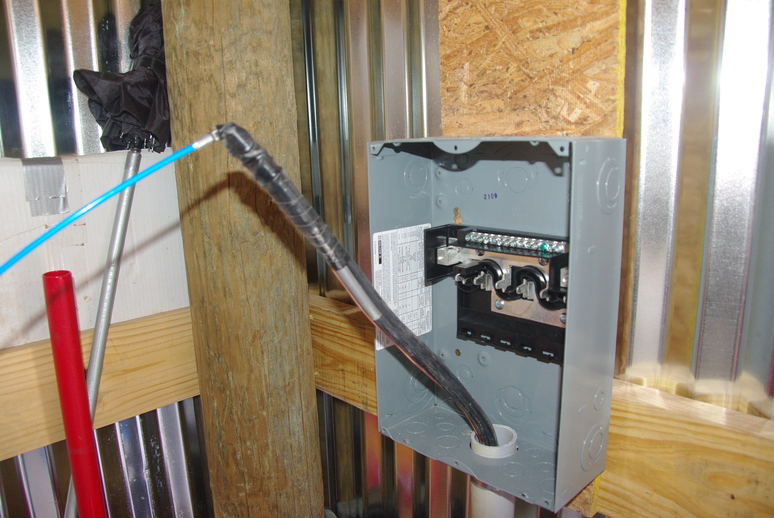
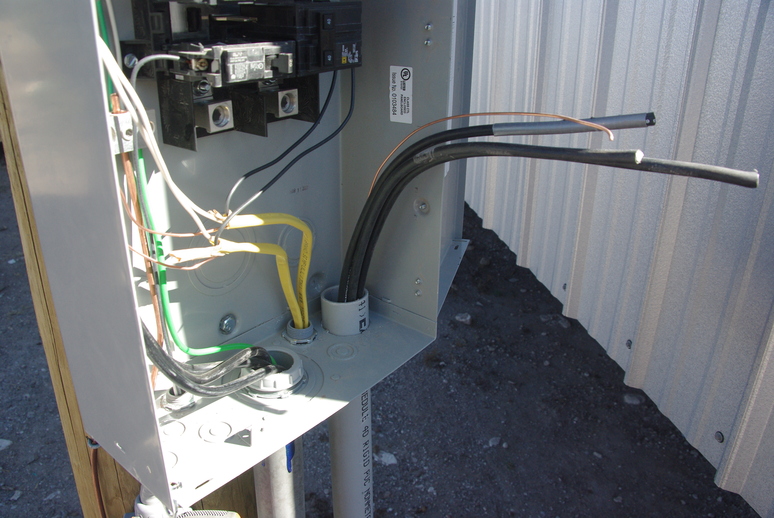
We felt it was a tad safer to pull from the shed as there are no live circuits there. That way, if the cable slipped suddenly, there would be no chance of brushing against a live connection.
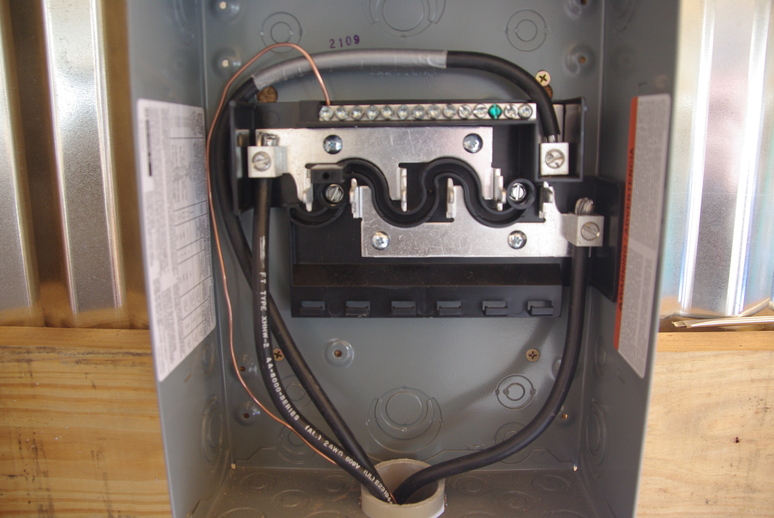
After removing a knockout in the bottom of the box and installing a feedthrough, we wired the cable that will connect the generator to the panel. The red/black wires are the 240 VAC, the white neutral, with the ground connected to the neutral. The ground wires also connect to a ground rod at the shed. This is in keeping with the meter pole wiring where the ground rod and ground there is also connected to neutral from the transformer.
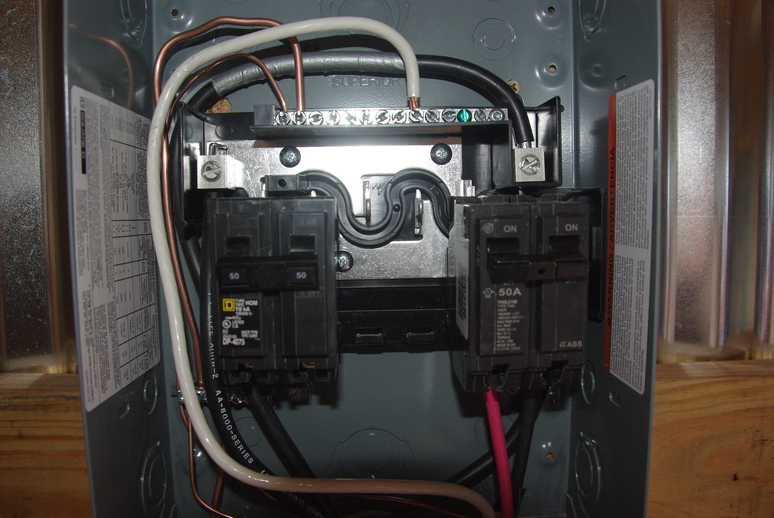
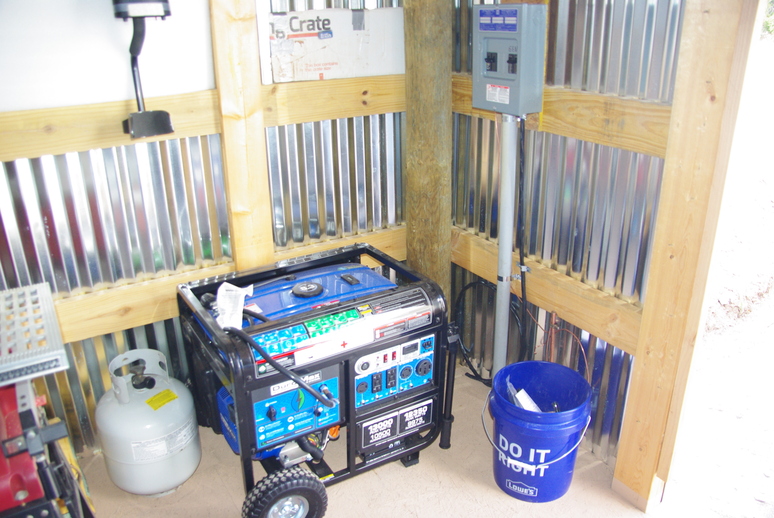
The circuit breaker on the left will supply 240 VAC for welders and/or plasma torches as I like to do metalwork occasionally. The center positions I left open for lights, outlets, etc. The below image shows the approximate layout for the generator and power panel. The exhaust will be vented outside to prevent carbon monoxide buildup inside the shed.
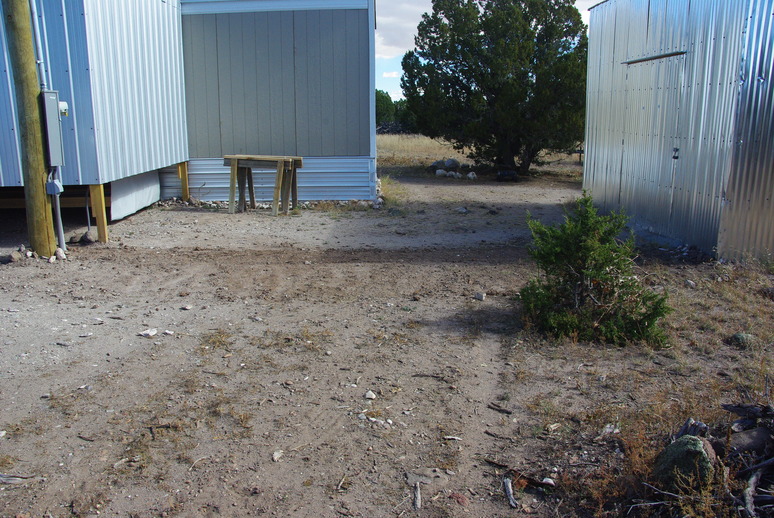
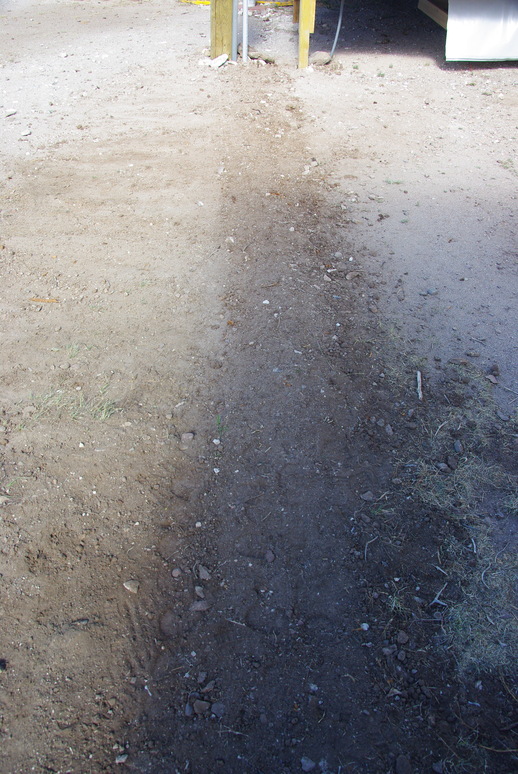
After filling in the ditch, we can say, “Job well done!”
There are still a few little details that need to be completed, such as generator plug wiring, exhaust piping, and meter pole circuit breaker connections. We will leave that final item until everything else is finished, for safety reasons.
We thank God for keeping us safe and giving guidance on all this work, and especially the beautiful scenery and mountains where we live! We are certainly grateful. Keep safe and if you don’t know the Lord Jesus, accept Him into your heart. You will never be dissapointed!
UPDATE: We have now installed the generator exhaust pipe outside the building! It may look a bit strange, but seems to work; and most importantly, the fumes are safely outside!
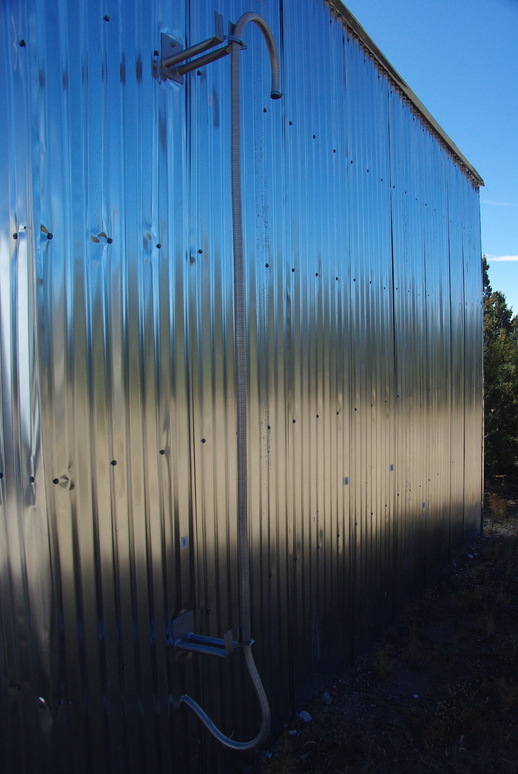
Now we are waiting for crimp-on lugs to make up the generator plug. All things in good time. Have a great day, and stay safe!